How to Rank Higher on Airbnb Search
How to rank higher on Airbnb search: a 30-day playbook ordered by leverage — search card, conversion, response signals, calendar and review velocity.
 By James Mitchell6 min read
Ranking higher on Airbnb is not a mystery; it's a sequence. The algorithm rewards a knowable set of signals — how searchers respond to your card, how lookers convert, how you behave as a host, how fresh your inventory reads, how stays end — and each signal has actions that move it. What most hosts lack isn't the information; it's the order: which actions move which signals fastest, and what a realistic month of ranking work looks like.
This is that month. Four weeks, ordered by leverage, each week's work feeding the next — the why behind each action is folded in briefly where it helps, but this page is unapologetically the do.
Week 1 — The search card: move click-through first
Click-through is the fastest signal to move and the gateway to every other: more clicks mean more conversion opportunities mean better data flowing to the algorithm within days.
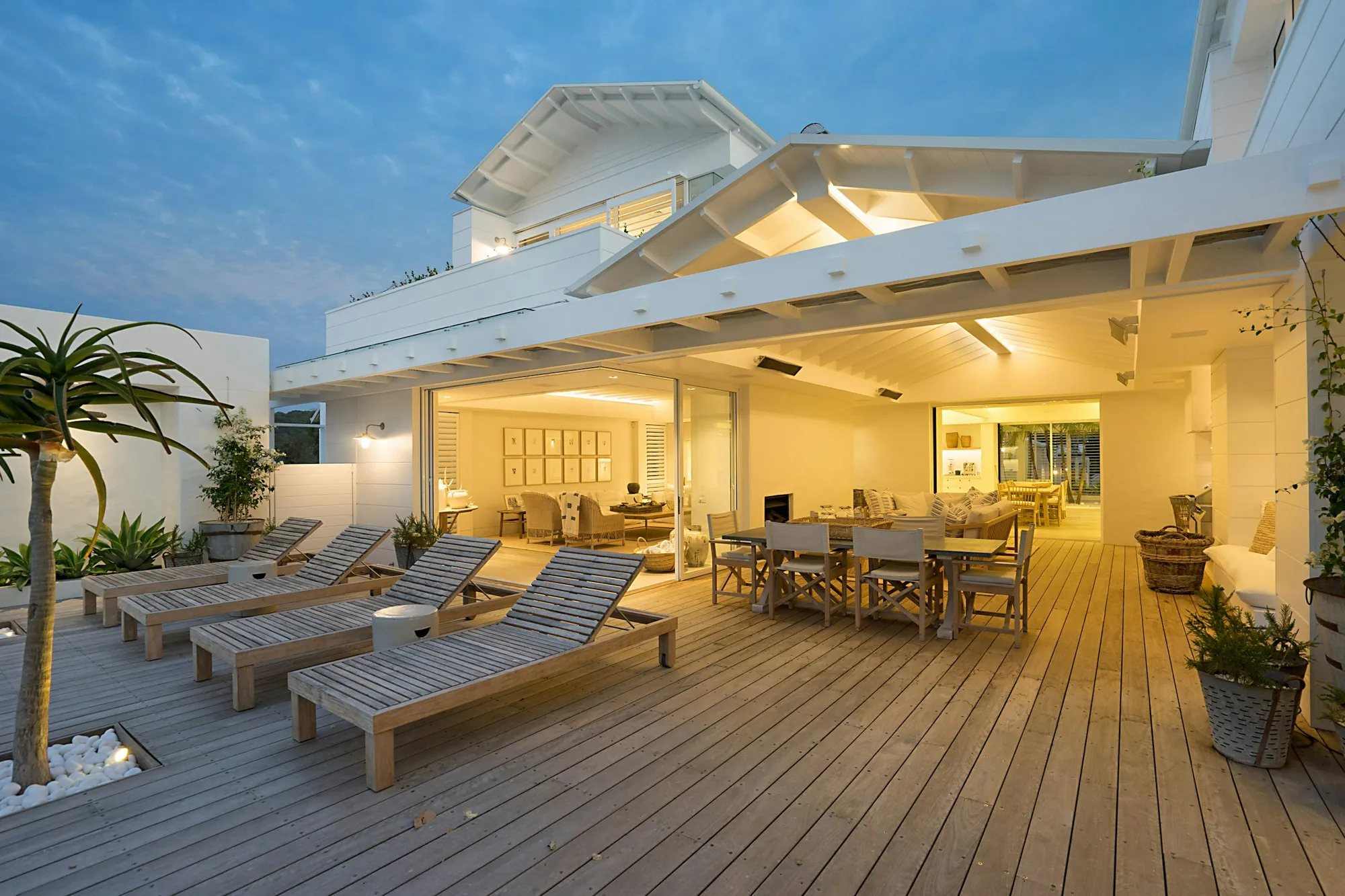
Day 1–2: shoot cover candidates. Five contenders of your property's single most desirable truth — golden-hour exterior, the view from the bed, the hot tub steaming, whatever your market covets — shot to read clearly at thumbnail size: strong single subject, high colour contrast, no clutter. Phone cameras suffice; light doesn't negotiate.
Day 3: rebuild the title. One deciding detail plus the essentials — the formulas: lead with the scarce amenity or location fact ("Hot tub · 5 min walk to beach · sleeps 8"), cut every adjective doing no work, and match the season's search intent.
Day 4–7: set the trial. Swap in the strongest cover, note the date and your baseline impressions/click-through from listing stats, and let it run — you'll read results at week's end and again at day 30. One variable at a time; patience is the method.
Week 2 — The close: convert the clicks you just earned
Booking conversion is the algorithm's heaviest behavioural read, and it's all craft:
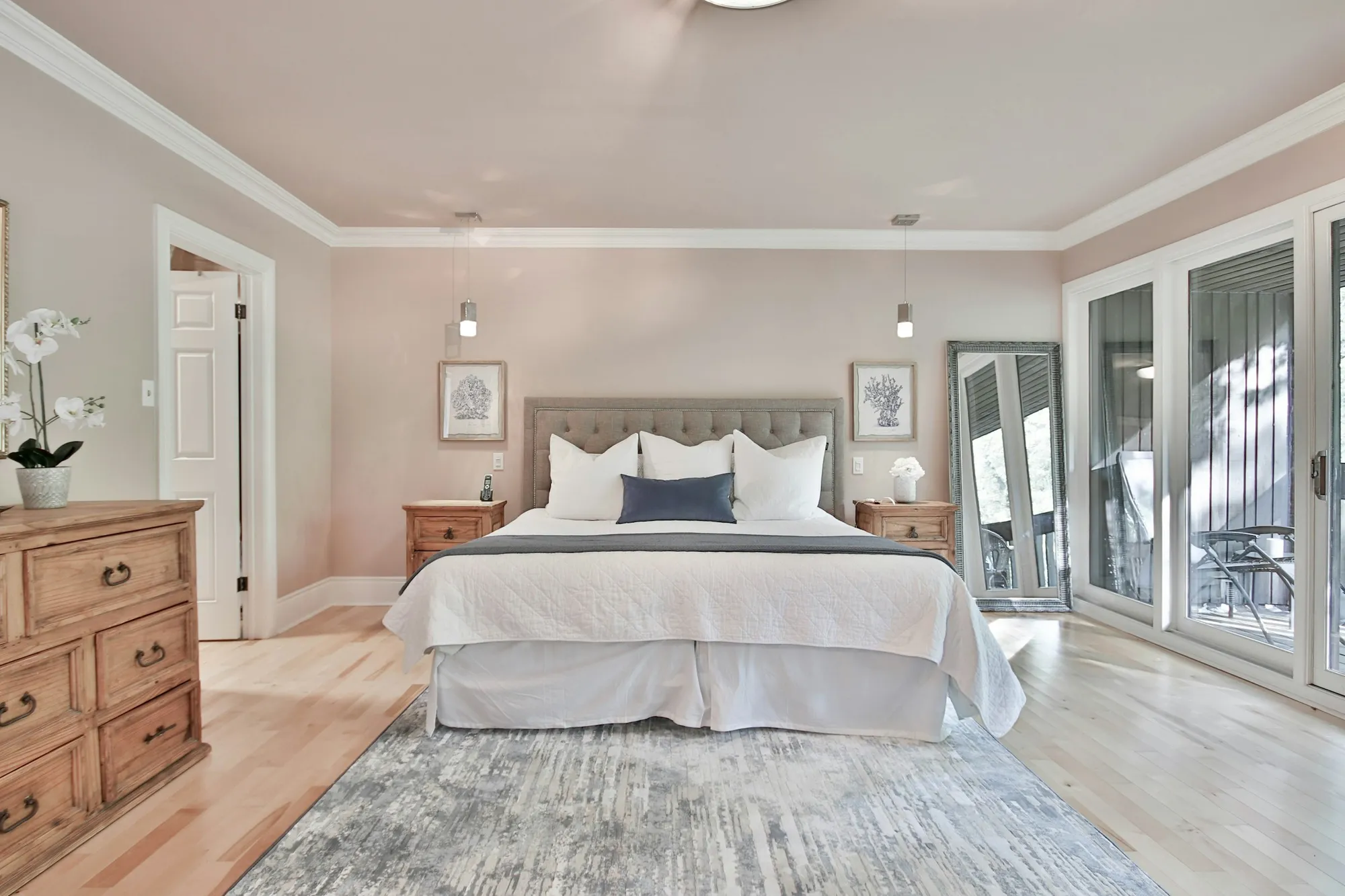
Re-sequence the photo story — arrival, living, kitchen, every bedroom, every bathroom, outdoors, care details, in that walk-the-stay order, captioned with use ("morning coffee spot" beats "patio"). Delete the weakest third of your photos; galleries are judged by their dullest frame.
Rewrite the description's first hundred words around your two or three genuine differentiators, stated as nouns and numbers rather than adjectives — a focused evening's work, not a week's.
Run the amenity audit — every field, thoroughly, including the forgotten filters (workspace, cot, EV charger, dishwasher). Each unticked box is a filtered search you're absent from; this twenty-minute task recovers literally invisible demand.
Check price plausibility against the comparison set your searchers actually see — not lowest, plausible; the full-rate conversion logic governs here. Mispricing suppresses clicks and poisons the week-1 gains.
Week 3 — Host signals: response, acceptance, friction
The behavioural cluster, mostly settings and systems:
Make response near-instant structurally. Quick replies loaded with the 25 situation templates; notifications on; the guide linked in your listing pre-answering the questions that generate enquiries at all. Response rate and speed are wholly ownable — own them this week.
Fix acceptance at the source. Audit the calendar and settings so requests you'd decline can't arrive: block honestly, set stay-lengths you genuinely want, price the awkward dates properly. Declines and host cancellations are the heaviest negatives on the board — the fix is upstream prevention, not downstream discipline.
Decide Instant Book deliberately. The distribution edge is real; enable it with the guest-requirement protections that make you comfortable, and pair it with the automated arrival rail so instant bookings land on a system, not a scramble.
Freshen the inventory reads. Calendar touched weekly (diarise it — thirty seconds), seasonal photos current, listing text dated nowhere. Staleness is a quiet suppressor; freshness is the cheapest positive signal available.
Week 4 — Review velocity: the compounding signal
Reviews move slowest and matter longest — week 4 builds the machine rather than the outcome:
Install the review sequence: your review of guests within 24 hours (the platform-nudge trigger), the scheduled gratitude-first ask, one day-10 reminder, exclusion glance for bumpy stays.
Fix the experience leaks reviews keep naming. Read your last twenty reviews for repeated niggles — the arrival confusion, the thin answer to "what's the Wi-Fi" — and route each to its system fix: the photographed check-in rail, the guide entry, the message timing. Every removed niggle raises the score ceiling on all future stays.
Respond to every review in the backlog — brief, warm, future-guest-aware. Responses are conversion copy and engagement signal, and clearing the backlog takes one evening.
Day 30 — Read the scoreboard, then hold the loop
Return to listing stats with your day-4 baseline: click-through up means the card works (if flat, trial cover candidate two — one variable, another fortnight); conversion up means the close works; both up and impressions will follow as the algorithm re-rates you over the coming weeks — position follows signals, always with a lag. Then convert the month into the standing loop: covers and titles re-trialled seasonally, the amenity-and-price check quarterly, response and calendar habits weekly, the review machine permanent. Rank isn't a summit; it's a maintained position — but maintained by systems, the upkeep is minutes.
A calibration note: ranking is relative — you're climbing past specific neighbours, and in dense markets the climb shows first in impressions for narrower searches (your filters, your dates) before broad ones. Judge by your own funnel numbers, not by obsessively searching yourself (results vary per searcher; your stats don't lie).
The maintenance loop, expanded: a quarter in the life
What "hold the loop" means in practice, traced across one quarter. Month one, week one: the seasonal flip — cover swapped to the season's covetable truth, title's deciding detail rotated, description first line re-led (the ten-minute rotation); baseline numbers noted. Every Monday: the thirty-second calendar touch, and a glance at response stats (the automated rail should be holding these without you — the glance is verification, not work). Month two: the amenity-and-price pass — one new filterable amenity added if the property gained one, price plausibility re-checked against the current comparison set, which shifts more than hosts expect as neighbours join and leave. Month three: the review read — the quarter's reviews mined for repeated niggles (each one routed to its system fix) and for new praise language worth promoting into the description's social-proof block. Quarter's end: the numbers against baseline, one experiment chosen for next quarter (a new cover candidate, a title variant), and done.
Total quarterly cost: perhaps ninety minutes beyond the Monday touches. The compounding return: a listing whose signals never decay — which, in a marketplace where most competitors set-and-forget, is itself a ranking strategy. Position erodes passively; the loop is what "maintained" actually means, and it's deliberately small enough to survive your busiest season.
The bottom line
Four weeks, ordered by leverage: card, close, behaviour, review machine — then the loop that holds the position for minutes a week. Every action doubles as a direct bookings improvement, so nothing waits on the algorithm to pay. Start with the cover shoot this weekend, and let a free WelcomeFlo guide and a disciplined review sequence begin compounding the signal that outlasts every other: stays that end five-star, on schedule, every time.
Create your digital welcome book
Build a beautiful mobile guest guide with WelcomeFlo.